Inerting (Vacuum/Pressure purging); Piping/Bonding/Grounding; Work Permits; Hot Work.
Inerting Approaches
Inerting is the process of replacing the atmosphere in a vessel with an inert gas (nitrogen, carbon dioxide, etc). This is done to prevent the formation of flammable/explosive mixtures. There are multiple approaches to purging and inerting:
vacuum purge (removing the atmosphere from the vessel and replacing it with an inert gas in stages; stages used to prevent the container from collapsing)
pressure purge (replacing the atmosphere in the vessel with an inert gas by pressurizing the vessel, also completed in stages)
sweep purging (replacing the atmosphere in the vessel with an inert gas by flowing the inert gas through the vessel)
siphon purging (replacing the atmosphere in the vessel with a liquid then filling with an inert gas)
combination of the above
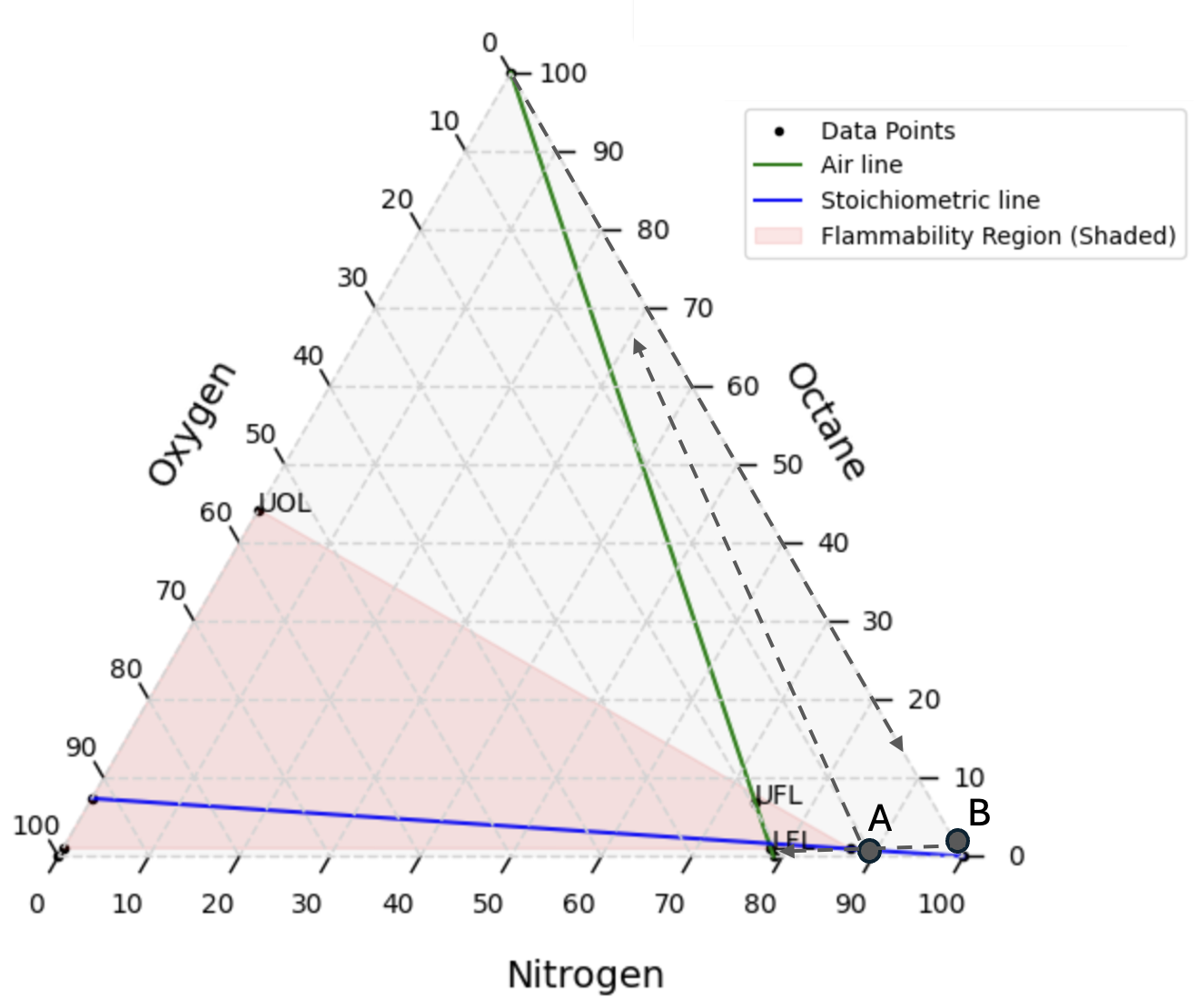
Figure 1:Plot of a ternary diagram where the path to avoid the flammability zone in red can go through the points A or B.
Vacuum or Pressure Purging Concentrations
The below equations can be used to determine the fraction of fuel (or oxygen), , in the vessel for vacuum or pressure purging with an inert gas. The amount of moles of the inert gas used is also given. is the cycle number or the number of purges completed.
Air Purging
Air flows into the vesssel
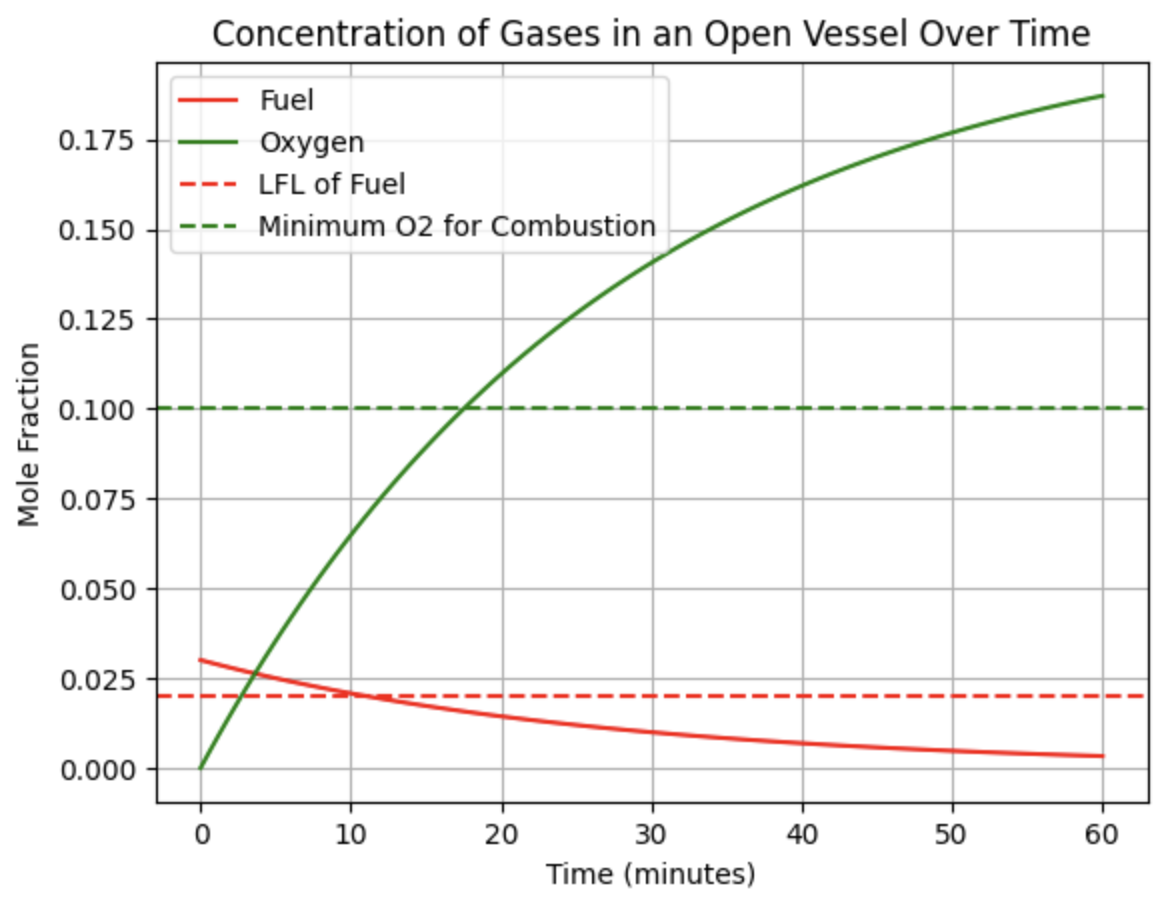
Figure 2:Concentration of oxygen and fuel for a fictitious scenario where the initial concentration of fuel and nitrogen is 3% and 96%, respectively with a volume of 20,000 liters, a temperature of 300 K, and an air flow rate of 0.5 mol/sec.
Control Techniques
There are multiple control techniques that can be used to reduce the exposure to workers from a toxic gas or vapor. These include:
Inherent Safety: Designing the process to eliminate or reduce the use of toxic gases or vapors.
Substitution: Replace the toxic gas or vapor with a less toxic or non-toxic alternative.
Minimization: Reduce the amount of toxic gas or vapor that is used in the workplace.
Isolation: Use of barriers or other methods to separate the toxic gas or vapor from workers.
Engineering Controls: Use of ventilation, enclosures, or other engineering controls to reduce the concentration of the toxic gas or vapor in the workplace.
Administrative Controls: Use of work practices, policies, and procedures to reduce the exposure of workers to toxic gases or vapors.
Personal Protective Equipment (PPE): Use of PPE such as respirators (full or half face) or supplied air respirators to reduce the exposure of workers to toxic gases or vapors.
Engineering Controls
Ventilation: Ventilation occurs with HVAC systems where air is circulated and filtered. However, most of the air is recirculated and only a small fraction is replaced with fresh air. The recirculation of air can lead to a build up of toxic gases and or distribute them to other areas of the workplace.
Ventilation where outside air is brought in can help reduce the concentration of toxic gases or vapors but it has significant energy costs.
Typical ventilation occurs with negative rather than positive pressure systems. Know the difference between positive and negative pressure systems and why one might be used over the other.
Local Venilation: Hoods
Hoods are effective at containing an expelling toxic gases or vapors. However, they can be expensive to install and maintain. They also require a significant amount of energy to operate.
Process Piping
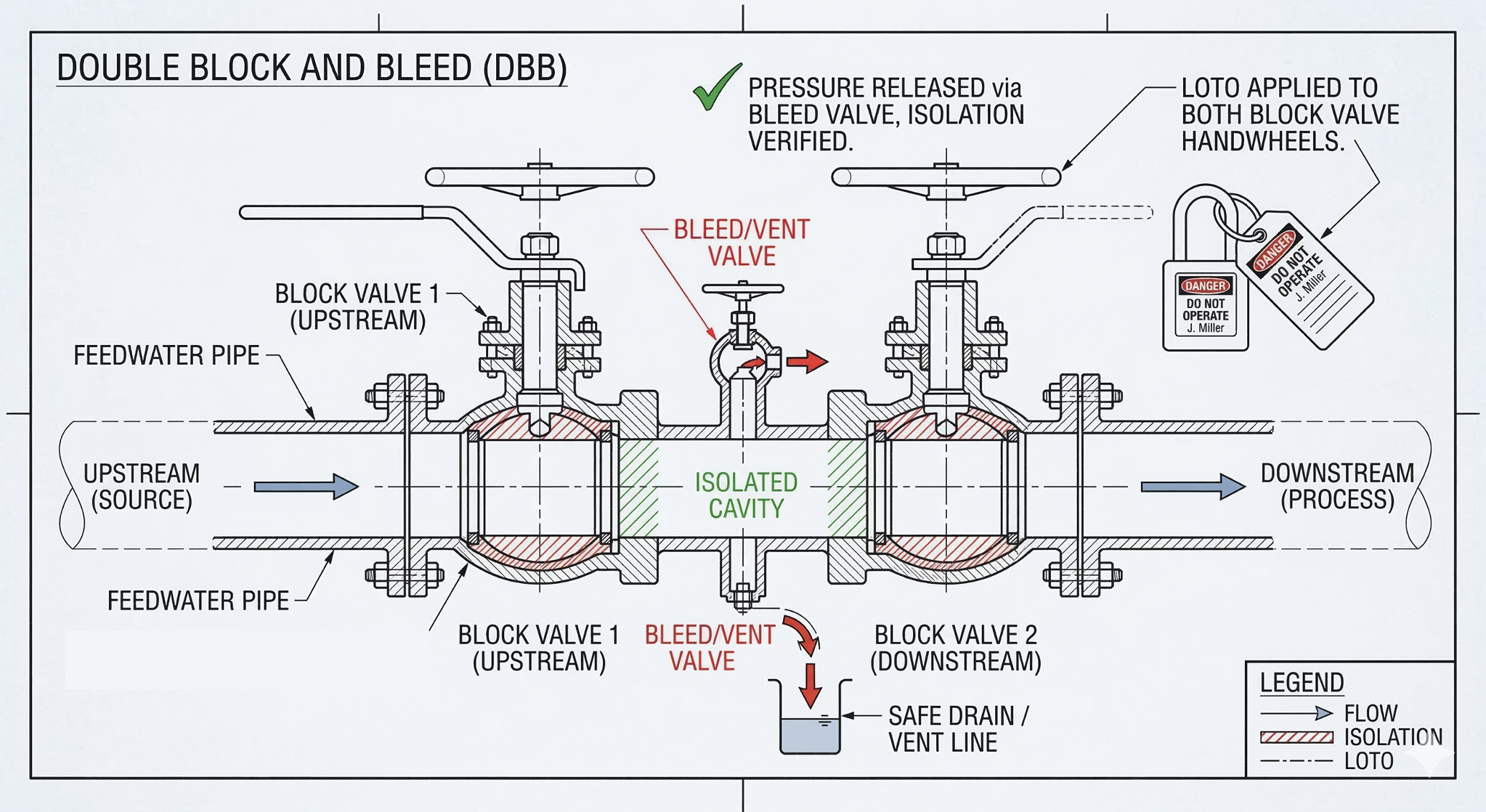
Figure 3:AI generated example image of a double block and bleed valve.
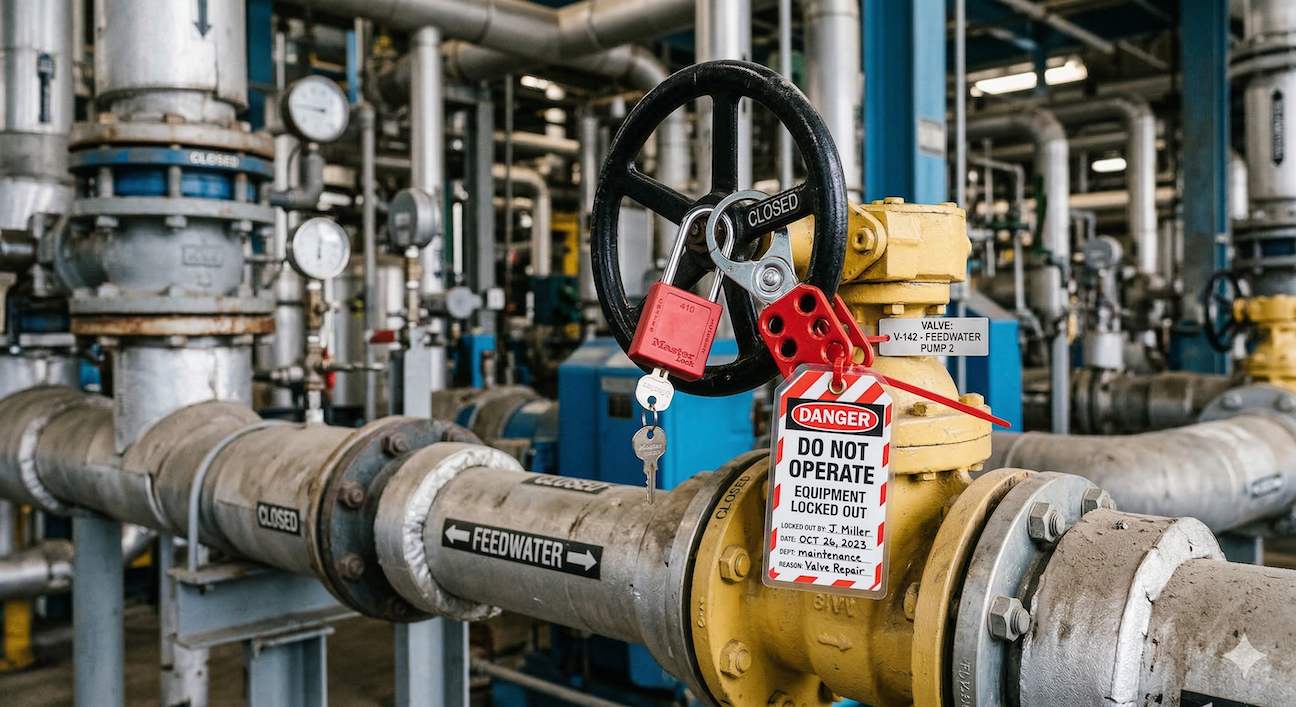
Figure 4:AI generated example image of a less than effective lock out and tag out (LOTO) scenario. (This image shows a less than ideal scenario where the locks do not appear to prevent the valve from either being opened or closed, and there are not effective tags on the locks with contact information.)
Safety Factors
Initiation Testing
ESD, thermal, friction, impact test methods to determine where the initiation threshold is
Personnel Protective Equipment
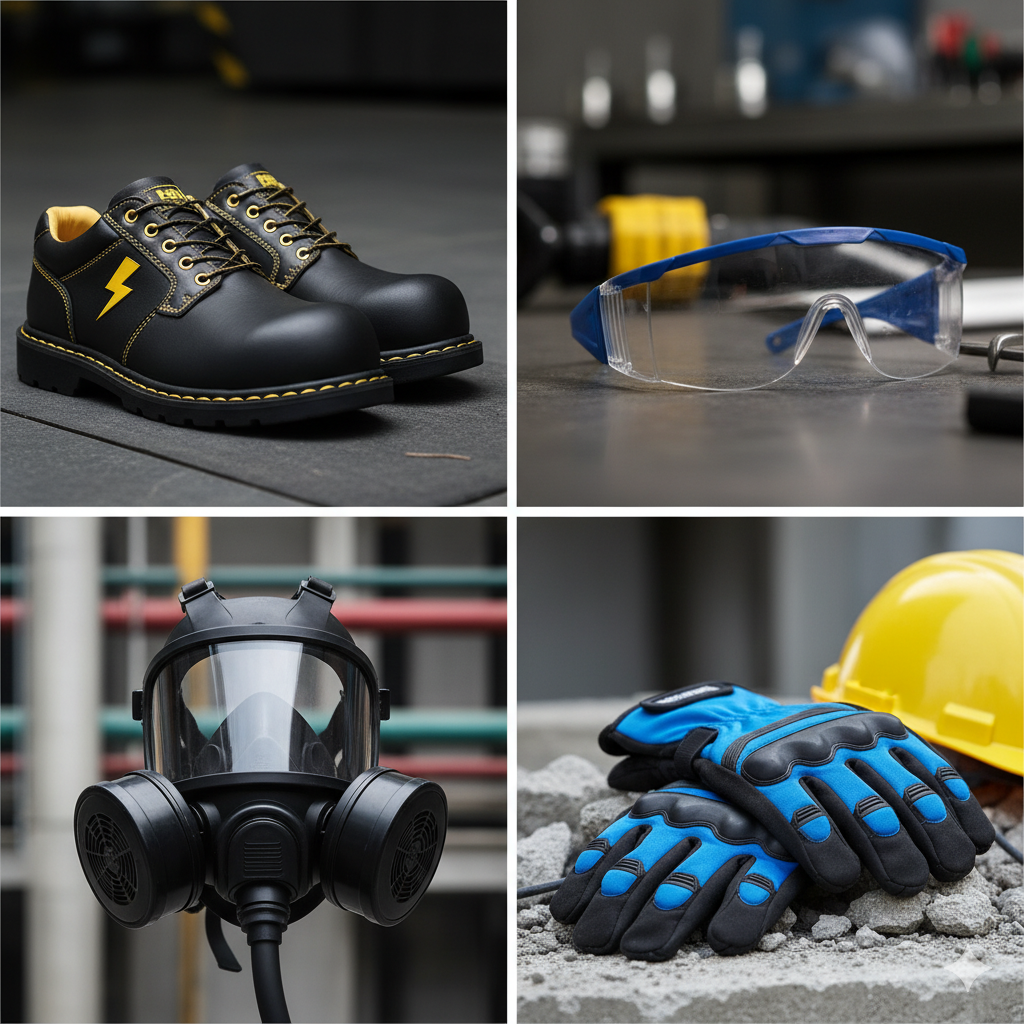
Figure 5:AI generated image of some examples of PPE
Spiritual Safeguards

Figure 6:AI generated image of a physical representation of spiritual safeguards.
- Guymon, C. (2025). Foundations of Spiritual and Physical Safety: with Chemical Processes.