What is an explosion?
An explosion is a rapid release of energy in an uncontrolled manner. This can be due to a rapid exothermic reaction, or a rapid release of pressure. The energy release can be due to a chemical reaction, or a physical change in state.
Hazardous Effects of Fires and Explosions
Thermal radiation
Asphyxiation
Toxic gases
Blast waves
Fragmentation
Theses effects can cause damage to property, injury, and loss of life.
Vapor Cloud Explosions (VCE)
This a release of a flammable vapor cloud that then mixes with air and ignites.
In-class VCE demonstration
Isopropal alcohol has a LFL and UFL of 2% and 12% by volume.
We could calculate or estimate:
energy from the event
internal pressure and
vent rate of the generated gases
Things to consider:
ignition characteristics (laminar vs turbulent, top vs center ignition)
flame speed
hazards analysis
Boiling Liquid Expanding Vapor Explosions (BLEVE)
BLEVEs are a type of explosion that occurs when a vessel containing a liquid is heated to the point that the pressure exceeds the strength of the vessel. Once the vessel ruptures, the pressure falls rapidly and the hot liquid then quickly vaporizes and expands. It then can mix with air and ignite.
High-Explosive Blasts
Image of TNT showing a solid piece melting. TNT melts at a relatively low temperature (~80C). TNT is usually melt casted into bombs or other shapes.
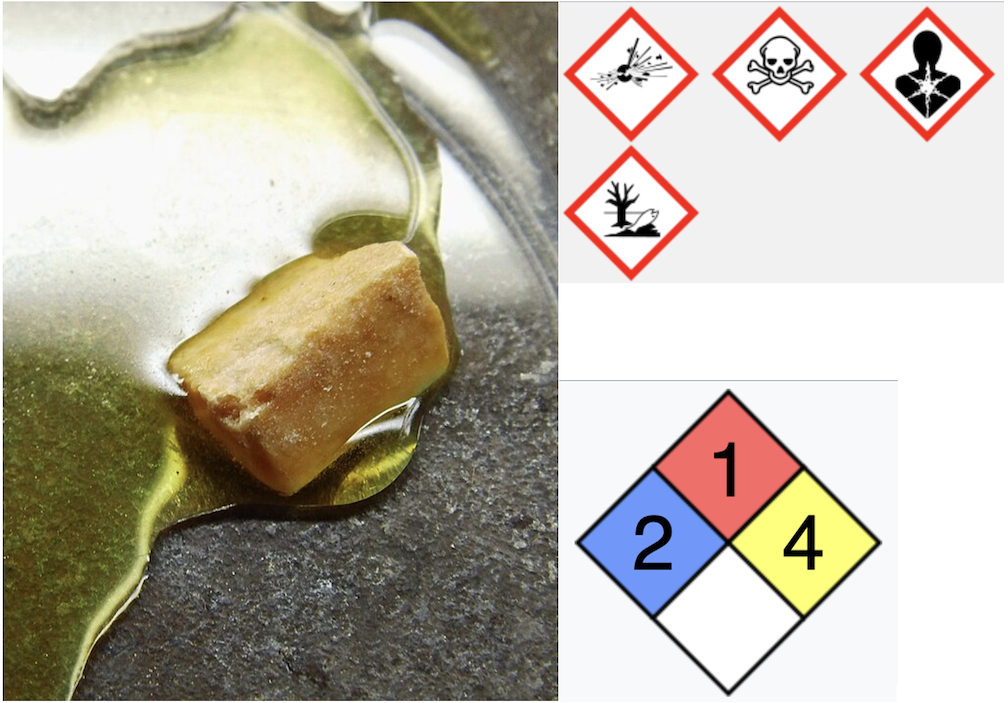
Figure 1:TNT Melt Casting, By Daniel Grohmann - Own work, CC BY-SA 3.0, https://
Detonation
TNT detonates. That is, if boosted properly, the reaction front moves through the material at the detonation speed, approximately 7 km/s (much faster than the speed of sound in TNT).
Deflagration
TNT, if not properly boosted, may only burn or deflagrate. The deflagration or burning reaction lasts much longer and thus the energy released per time is much smaller.
TNT Equivalence and Blast Effects
TNT is a explosive that has been used for many years and is one of the most tested. TNT detonation blast pressures (both side-on and reflective), impulse (integral of the blast pressure with respect to time), and arrival times have been experimentally measured for spherical and hemispherical (ground level) blasts of TNT at various distances and various TNT masses. The data for those tests are given in the TM5-1300 document or in other references like UFC 3-340-02. These data have been fit to a model that is used to assess the hazards from explosions (of TNT or otherwise). If the explosive is not TNT, testing or modeling is done to determine the equivalent TNT mass. The TNT model (with the scaled TNT mass) is then used to assess the hazards.
One very large hazard from TNT blasts is the shock wave (and blast wind) referred to as over-pressure. Typically, over-pressure is measured in psi (pounds per square inch) or kPa (kiloPascals). The over-pressure is the pressure above the ambient pressure. The over-pressure is a function of the distance from the explosion and the TNT mass.
Overpressure blast effects are typically categorized as follows:
>0.4 psig: limited minor structural damage
0.4-1.0 psig: window breakage to partial demolition of houses
1-5 psig: significant damage to buildings to nearly complete destruction of houses
>5 psig: severe damage
There is approximately 4184 J of energy per gram of TNT. You can use that as an estimate for TNT equivalence given an energy output from a blast.
TNT Overpressure Model
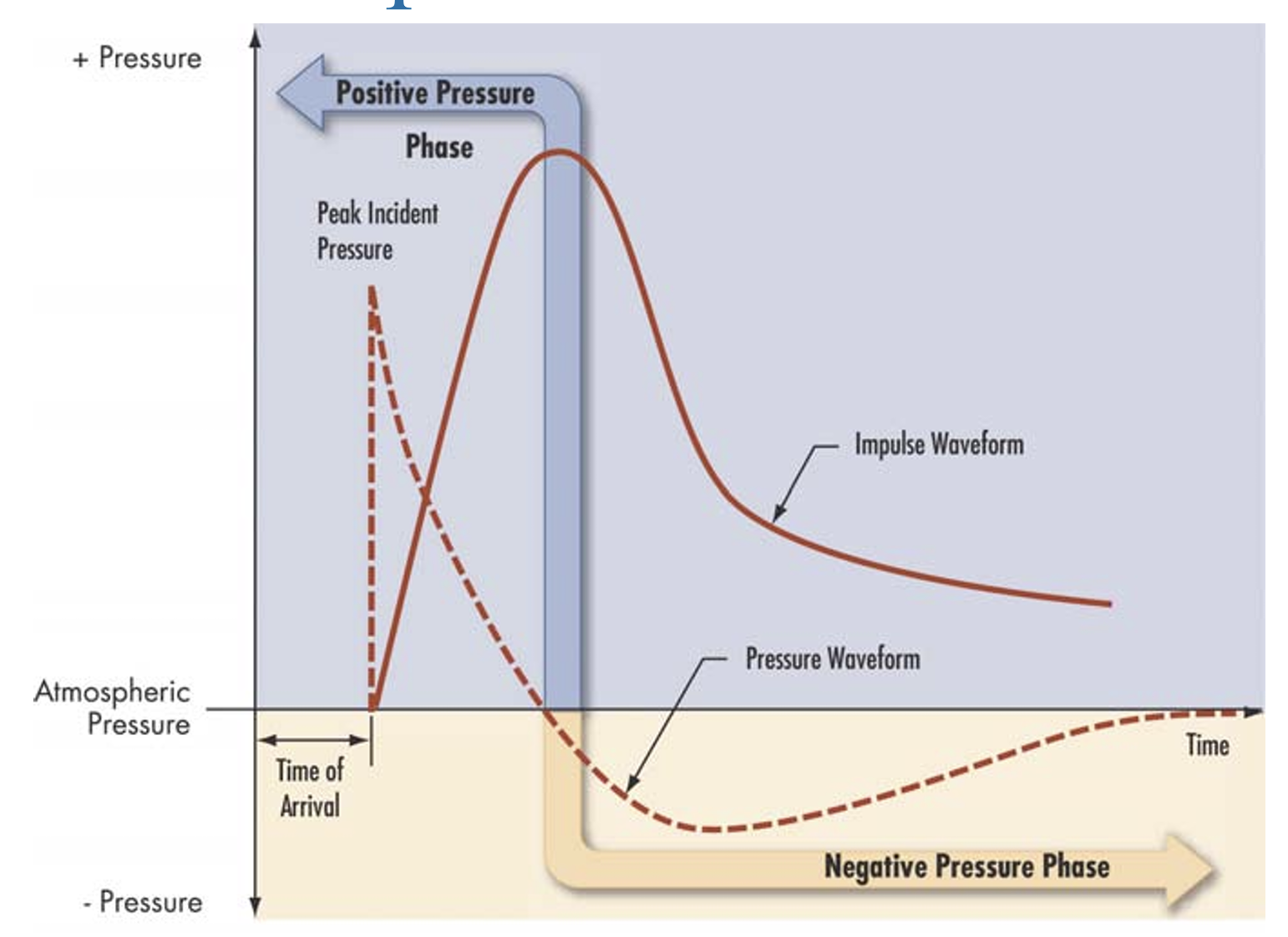
Figure 2:Image of the TNT blast pressure and overpressure as a function of time. Credit to https://
The peak side-on overpressure can be estimated for a given mass of TNT from the following equation (hemispherical blast or blast on the ground):
where is the overpressure in psig (gauge), is the ambient pressure in psia, and is the scaled distance (m/kg^1/3). is the distance in meters divided by the TNT (or equivalent) mass to the 1/3 power. Equation from G. F. Kinney and K. J. Graham. "Explosive Shocks in Air (Verlin, Germany: Springer-Verlag, 1985).
import numpy as np
import matplotlib.pyplot as plt
def overpressure(pa, ze):
numerator = 1616*(1 + (ze/4.5)**2)
denom1 = np.sqrt(1 + (ze/0.048)**2)
denom2 = np.sqrt(1 + (ze/0.32)**2)
denom3 = np.sqrt(1 + (ze/1.35)**2)
return pa*(numerator/(denom1*denom2*denom3))#plot the above relationship
ze = np.linspace(0.1, 10, 100)
pa = 14.7 #psi
po = overpressure(pa, ze)
plt.loglog(ze, po)
plt.xlabel('Scaled distance, ze (m/kg^0.333)')
plt.ylabel('Peak side-on overpressure (psig)')
plt.grid()
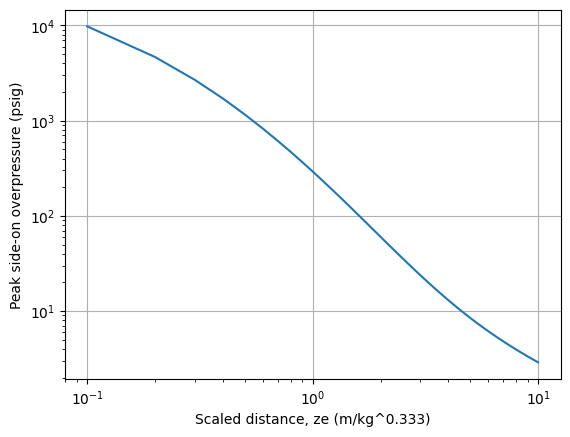
For example, using the above correlation, the peak overpressure at 100 m from a 1000 kg TNT blast is:
ze = 100/(1000**0.333)
po = overpressure(pa, ze)
print(f'At a distance of 100m, the peak side-on overpressure from a 1000 kg blast is {po:.2f} psig')
At a distance of 100m, the peak side-on overpressure from a 1000 kg blast is 2.89 psig
Munroe Effect and Explosive Devices
The Munroe effect is used in perforation guns for oil wells, armor piercing weapons, or other devices. The effect of the explosive can be significantly increased in a particular direction by shaping the explosive charge. The generated gases are focused in a particular direction and the pressure is thereby significantly increased.
Perforation Guns and Oil Recovery
Perforation guns are used in oil wells to create vias for oil to be recovered from otherwise impermeable layers. The gun has multiple perforation charges usually arranged in a spiral pattern. The charge creates a high pressure jet of solid copper or other malleable metal to punch a hole through the gun casing, through the bore lining and into the rock. The diameter of the holes vary but typically are about the diameter of your finger.
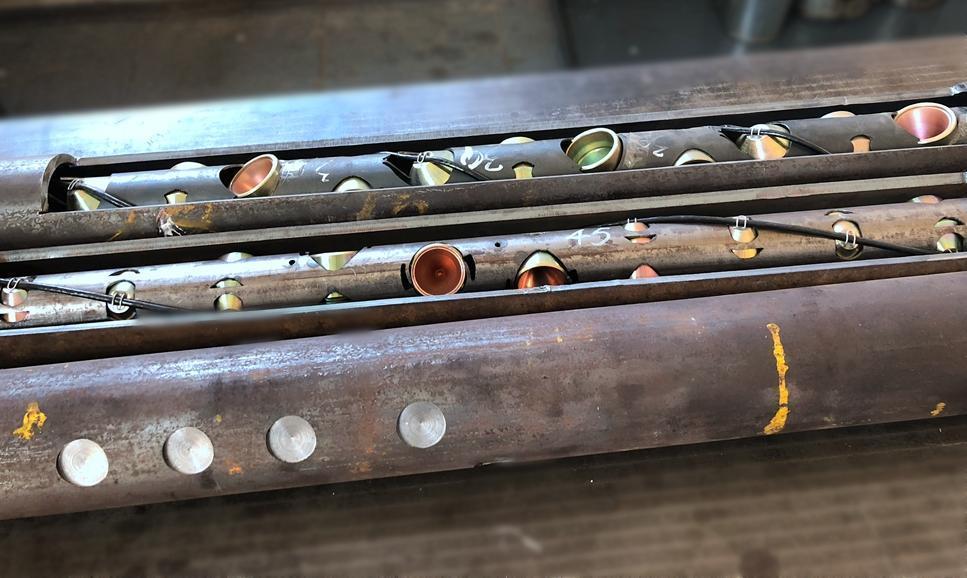
Figure 3:Shape charges in a perforating gun. Credit to https://
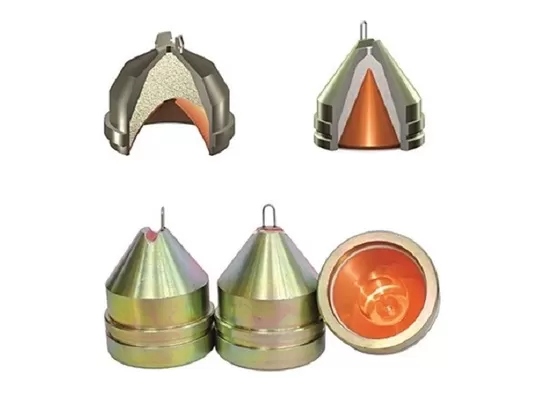
Figure 4:Images of shape charges with a copper lining. Credit to https://
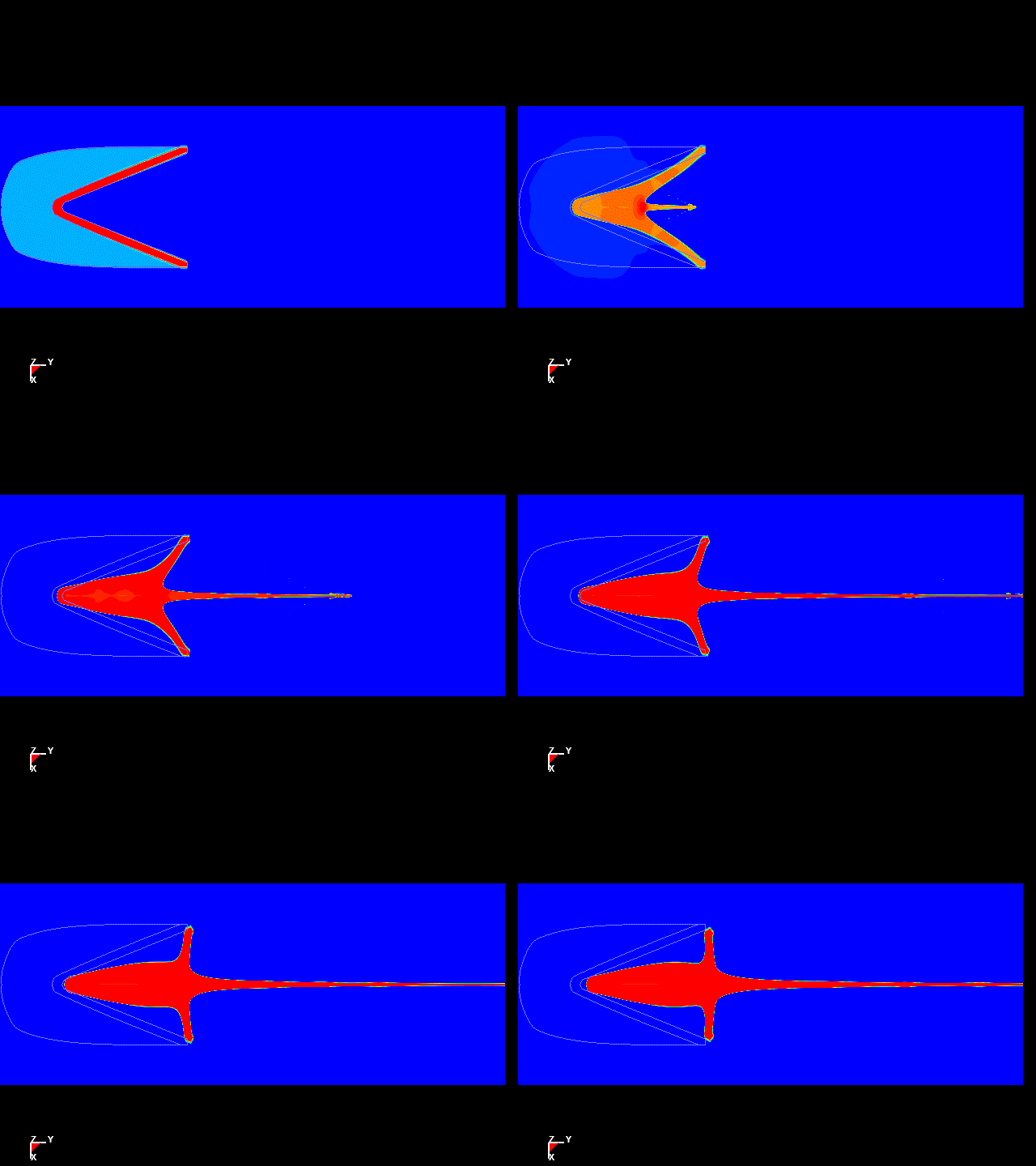
Figure 5:Shape charge gif animation. Credit to https://
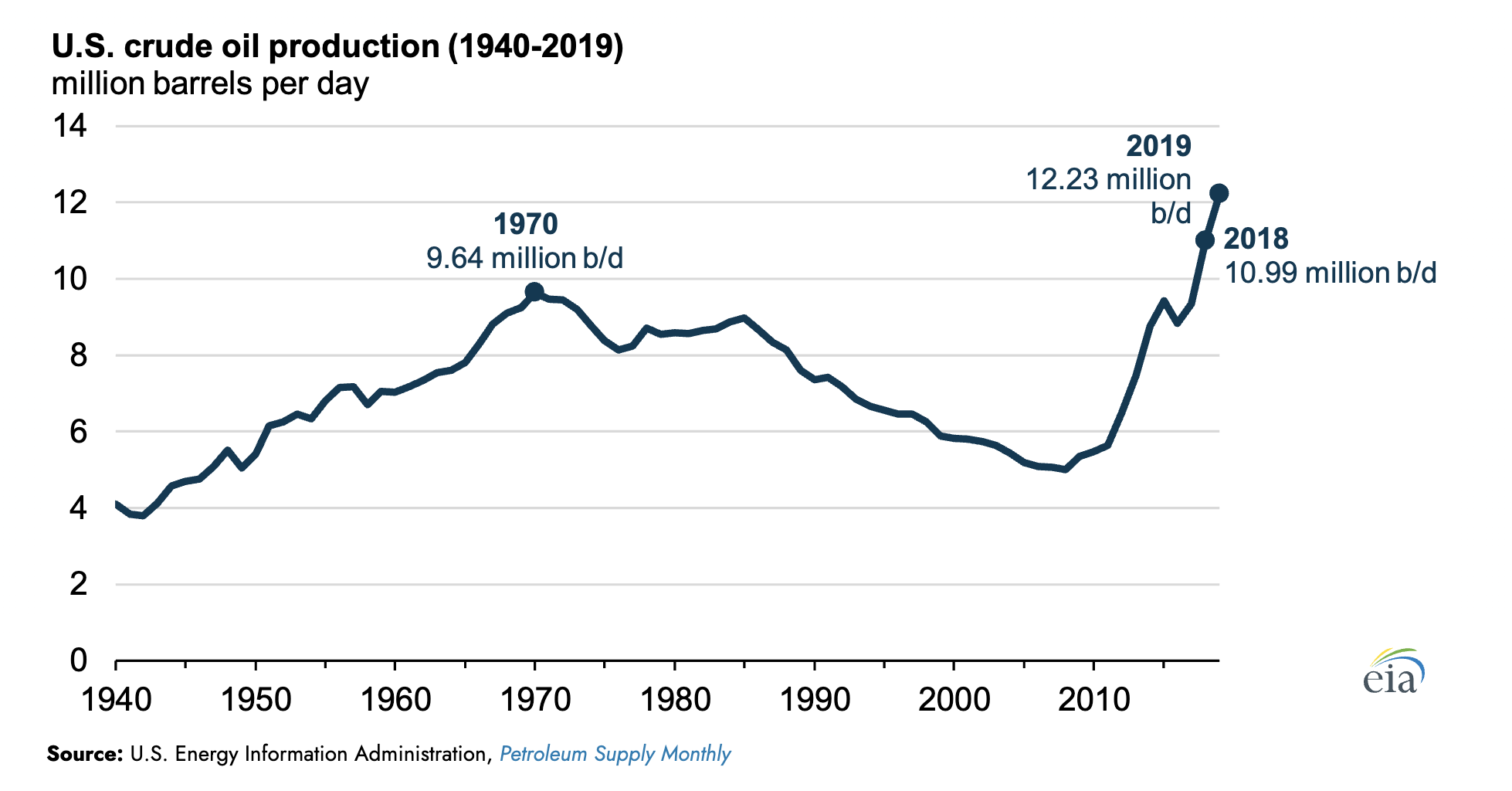
Figure 6:Crude Oil Production PLot. Credit to https://
Pressurized Vessel Bursting
This is referred to in the book (Crowl and Louvar) as Mechanical Explosions.
P1 = 101325 # ambient pressure, Pa
P2 = np.linspace(101325, 1e7, 100) # pressure range, Pa
V = 1 # volume, m^3
gamma = 1.4 # ratio of specific heats
Ebrody = (P2 - P1)*V/(gamma - 1)/(1e6) # energy required to compress air, MJ
Eisoentropic = P2*V/(gamma - 1)*(1-(P1/P2)**((gamma-1)/gamma))/(1e6) # energy required to compress air isentropically, MJ
Eisothermal = P2*V*np.log(P2/P1)/(1e6) # energy required to compress air isothermally, MJ
Ecrowl = P2*V*(np.log(P2/P1) - (1-P1/P2))/(1e6) # energy required to compress air using Crowl's method, MJ
n = P2*V/(8.314*298)
plt.plot(P2/1e5, Ebrody, label='Brody')
plt.plot(P2/1e5, Eisoentropic, label='Isoentropic')
plt.plot(P2/1e5, Eisothermal, label='Isothermal')
plt.plot(P2/1e5, Ecrowl, label='Crowl')
plt.xlabel('Pressure (bar)')
plt.ylabel('Energy (MJ)')
plt.legend(); plt.show()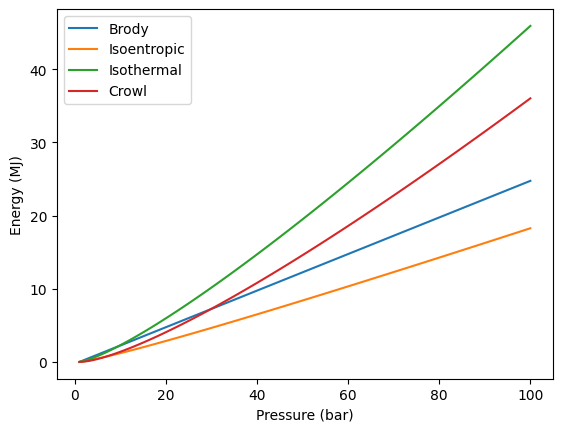
*If you divide the energy by the number of moles in the volume (assuming room temperature) to get an energy per mole, you get the plot given in Figure 6-26 in the book.
The above plot can then be used to estimate a TNT equivalent mass for the given energy and then thereby estimate the overpressure at a given distance.
- Guymon, C. (2025). Foundations of Spiritual and Physical Safety: with Chemical Processes.