Fault tree analysis (FTA) is a top-down, deductive failure analysis in which an undesired state of a system is analyzed using boolean logic to combine a series of lower-level events. This analysis method is used to understand how systems can fail, to identify the best ways to reduce risk, and to estimate event rates of a safety accident or a particular system level (functional) failure.
Fault Tree Analysis (FTA): Commuting to Work or School
Procedure
Communte to work or school avoiding injury from a traffic accident or other hazards. Some events during that commute could be:
crossing the street on foot
driving a car through a neighborhood
driving a car through a busy intersection
driving a car on a two-lane highway
driving a car on a freeway
driving a car through a high-pedestrian area
Fault Tree Analysis (FTA): Heated Batch Reactor
Procedure
A batch reactor is used to complete a reaction needed for the benefit of others. The reactor process has the following processing steps:
The reactor is filled with the raw material, a somewhat toxic material.
The reactor is heated to the desired temperature (100 F).
The reactor is pressurized to the desired pressure (20 psig).
Reactant B is slowly added to the reactor. An exothermic reaction occurs and the jacket must begin to cool the reactor to maintain the desired temperature.
The reaction proceeds at a given reaction rate at that temperature and pressure until all of the reactant B has been added.
The reactor is cooled to room temperature and the product is removed.
Some Hazards
Product C has a low boiling point and is toxic. If the reactor is not cooled properly, the product will vaporize and escape from the reactor.
If stirring is not maintained, the reaction will not proceed at the desired rate and the reactor will overheat.
Reactor is used for multiple products
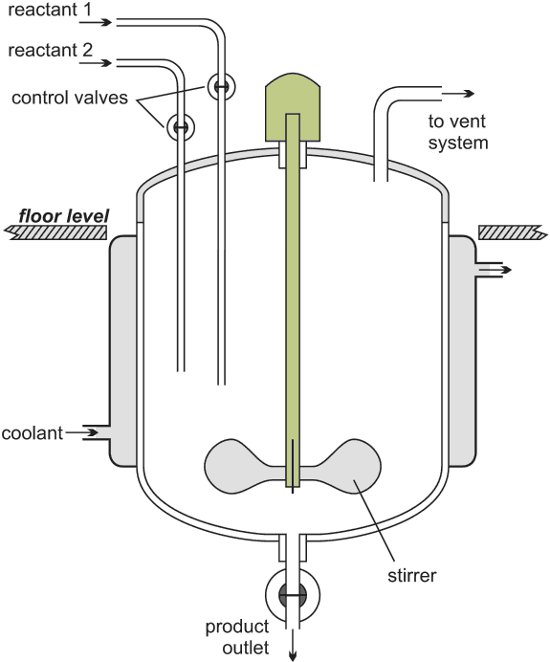
(a)Batch Reactor
Figure 1:Image of the batch reactor credit to: https://
Fault Tree Analysis (FTA): MTV Flares
A batch mixing process is used to mix the Magnesium, Teflon, and Viton with a solvent to make an aerial flare. The aerial flare can be used as a decoy to distract heat-seeking missiles from hitting an aircraft. Viton, a fluoroelastomer binder, is disolved in a solvent and then carefully mixed with the Magnesium and Teflon powders. The solvent then evaporates and the particles are coated with viton. The mixture can release significant energy and is sensitive to ignition.
The batch mixing process can have the following processing steps:
Binder preparation: Viton is dissolved in a solvent to create a binder solution.
Powder mixing: Magnesium and Teflon powders are carefully mixed together in a controlled environment to prevent ignition.
Binder addition and mixing: The binder solution is slowly added to the powder and the mixture is thoroughly mixed to ensure uniform coating of the powders with the binder.
Granulation and Solvent evaporation: The solvent is allowed to evaporate under processing condition, leaving behind the granulated coated powders.
Pressing: The granules are pressed into the desired shape for the aerial flare.
Machining or Cutting: The pressed material is machined or cut into the final shape of the aerial flare.
Fault Tree Analysis (FTA): Seat Belt Pre-tensioner
Seat belt pre-tensioners are devices that automatically tighten the seat belt in the event of a collision, helping to secure the occupant in place and reduce the risk of injury. The pre-tensioner activates before the airbag deploys, ensuring that the occupant is properly restrained during a crash.
The pre-tensioner contains a small reactive charge that ignites when a collision is detected, causing a piston to rapidly pull the seat belt tight. This mechanism helps to minimize the forward movement of the occupant and can significantly reduce the severity of injuries in a crash.
Processing steps for the seat belt pre-tensioner include:
Fill the pre-tensioner with the reactive charge.
Seal the pre-tensioner to prevent leaks (or contamination).
Fault Tree Analysis (FTA): Bhopal Disaster
The Bhopal disaster was a gas leak incident in India, considered one of the world’s worst industrial disasters. It occurred on the night of December 2-3, 1984, at the Union Carbide India Limited (UCIL) pesticide plant in Bhopal, Madhya Pradesh. The disaster resulted in thousands of deaths and injuries due to the release of methyl isocyanate (MIC) gas.
The incident was caused by a combination of factors, including poor maintenance, inadequate safety measures, and human error. The gas leak occurred when water entered a storage tank containing MIC, leading to a chemical reaction that produced a large amount of toxic gas.
You can read more about the Bhopal disaster here: Bhopal disaster and elsewhere.
Spiritual FTA
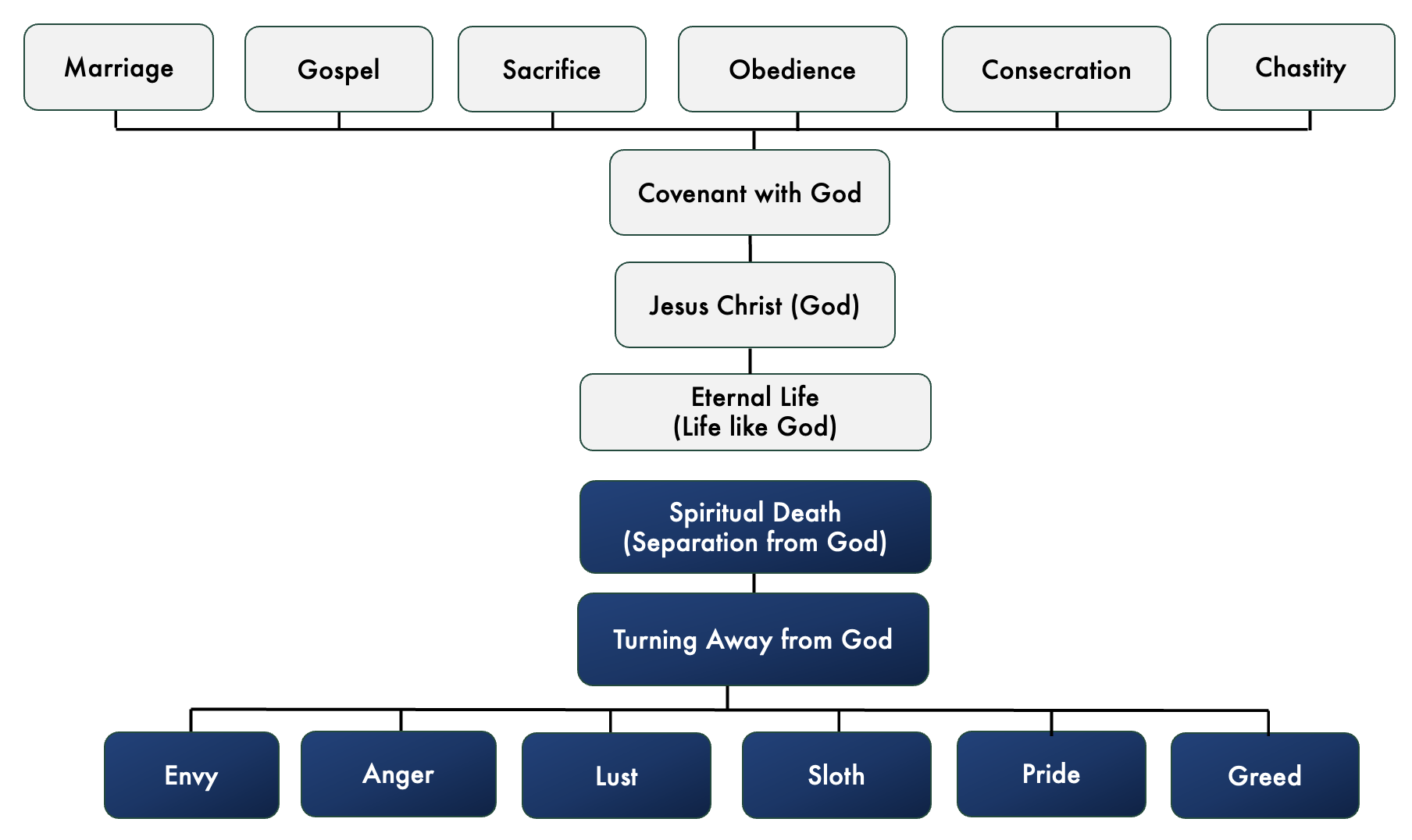
Figure 2:Spiritual FTA Example
Combination of FTA and FMEA:
An accident investigation prior to the accident
Example start on an FTA: (lower left is ‘Blades fall off’)
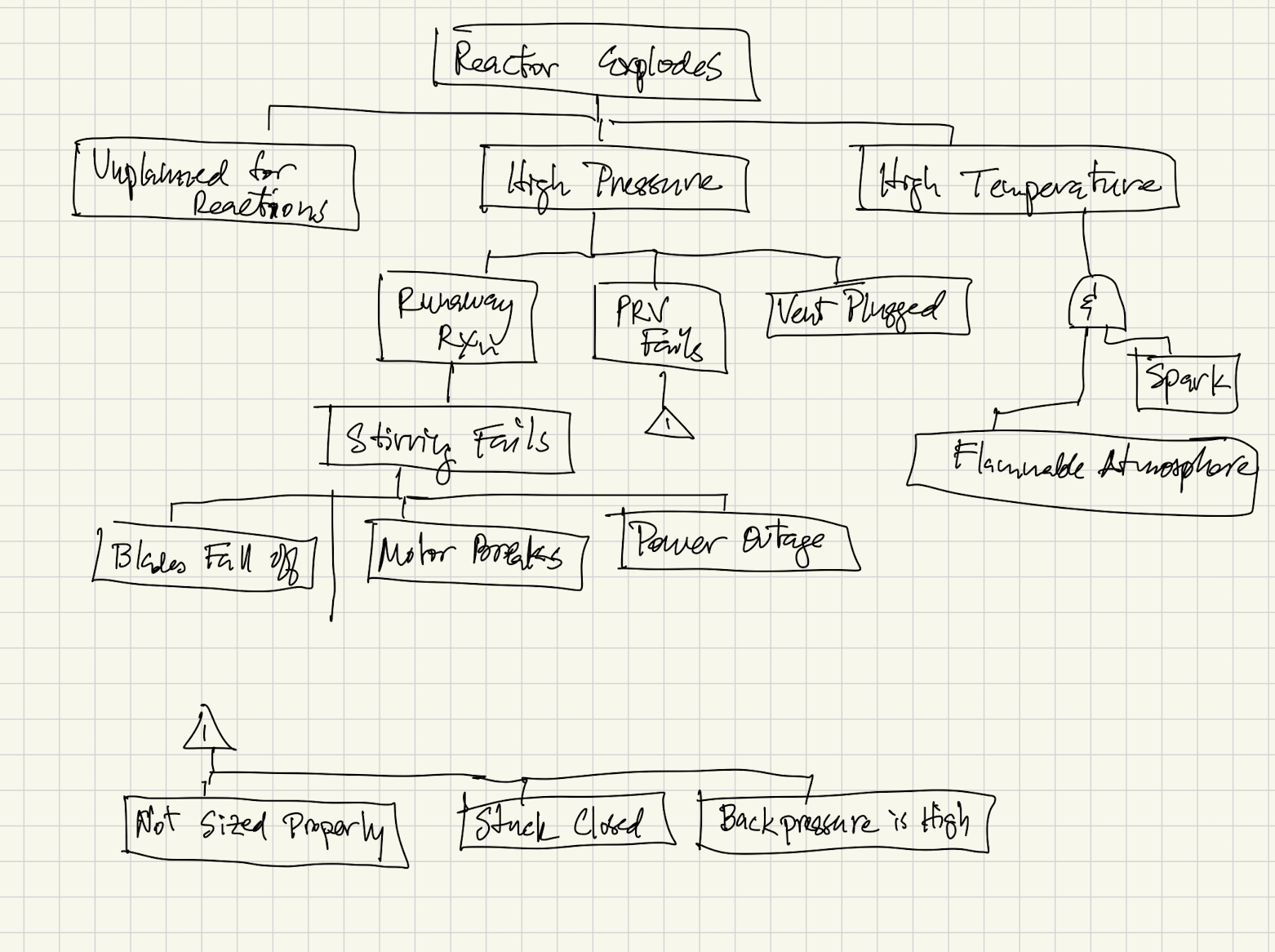
Figure 3:Example Fault Tree Analysis
Example start of the FMEA/ Hazards Analysis
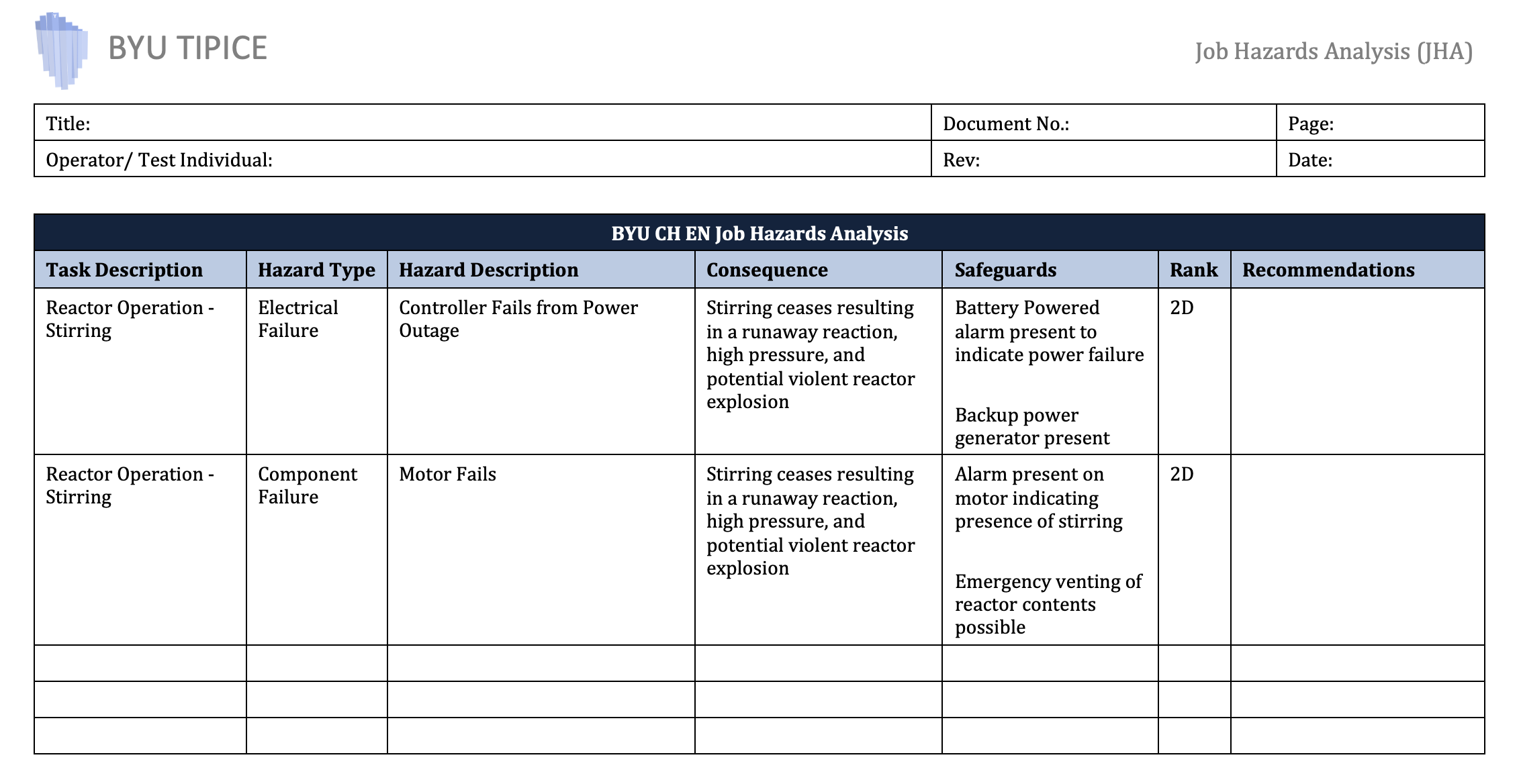
Figure 4:FMEA Example
Link to a template for an FMEA: https://github.com/clint-bg/safetyinjc/blob/main/exports/FMEA Template.docx
- Guymon, C. (2025). Foundations of Spiritual and Physical Safety: with Chemical Processes.