Ethics and the Gospel of Jesus Christ
| Ethic | Gospel of Jesus Christ |
|---|---|
| Deontology (Duty) | Obey the laws and ordinances of the Gospel |
| Virtue (Becoming) | Follow the Savior and become like Him |
| Contractarianism | Make and keep covenants |
| Utilitarianism | Love God and others for “[God] doeth not anything save it be for the benefit of the world; for he loveth the world, even that he layeth down his own life that he may draw all men unto him.”[1] |
On Becoming Like Jesus
The God of this world who condescended and came to earth as a man was perfectly obedient to his father. He was an example of virtue. He invited us to follow Him:
“Come unto me , all ye that labour and are heavy laden, and I will give you rest. Take my yoke upon you, and learn of me; for I am meek and lowly in heart: and ye shall find rest unto your souls. For my yoke is easy, and my burden is light.”[2]
“I am the way, the truth, and the life.”[3]
“I am the bread of life: he that cometh to me shall never hunger; and he that believeth on me shall never thirst.”[4]
“Follow me.”[5]
“Be ye therefore perfect, even as your Father which is in heaven is perfect.”[6]
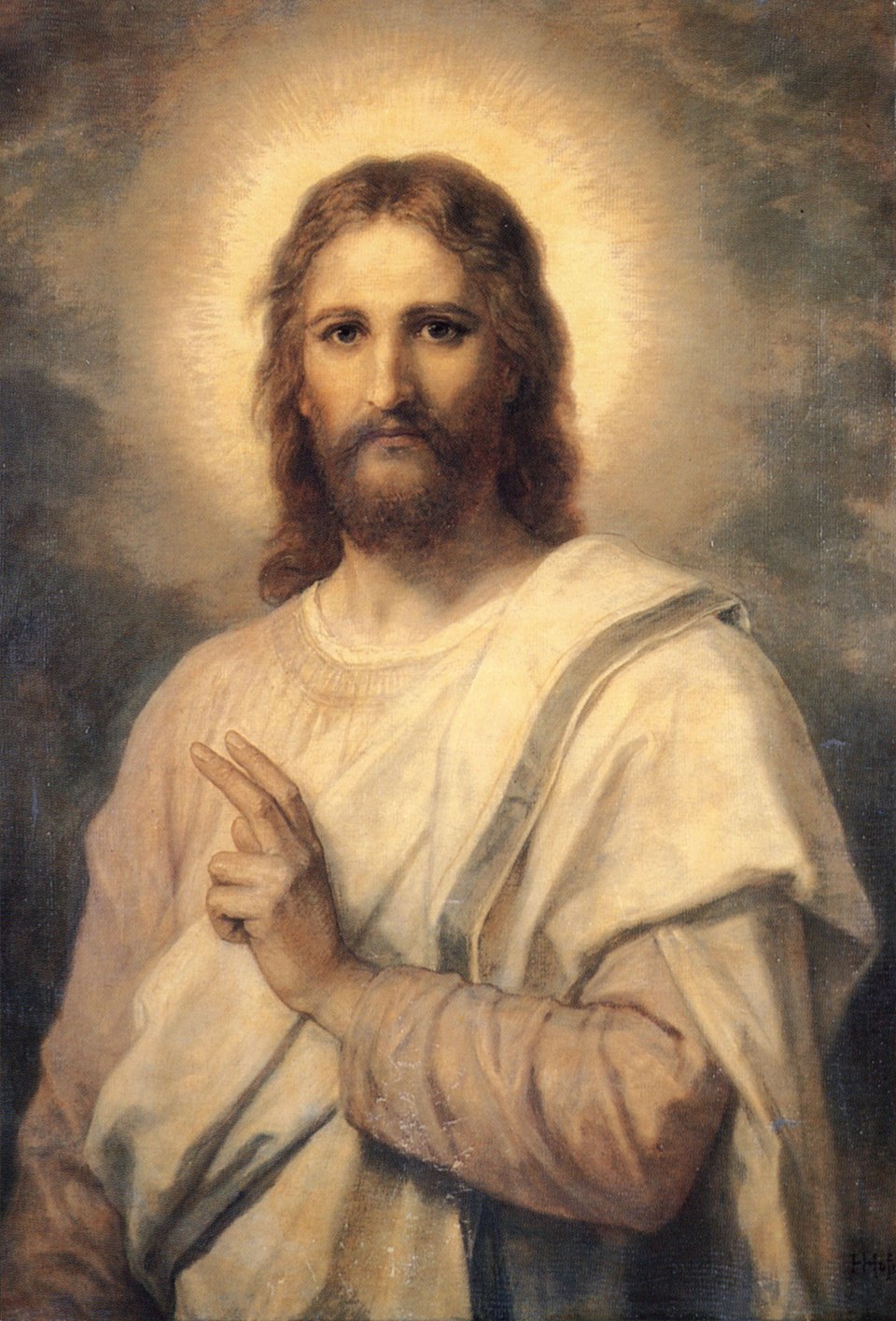
Figure 1:Painting of Jesus Christ by Hofmann
We can become like Jesus Christ as we gain knowledge about Him, practice being like Him (keeping covenants, failing, and repenting), and eventually mastering His attributes. We need to spend regular time in the scriptures to gain knowledge and then inevitibly we will practice as we live, and over and over we can eventually master that process to the best of our ability. That process of becoming like Jesus Christ where we gain knowledge about him from prophets and the influence of the Holy Ghost, then practice on Earth, and continue to master that process throughout eternity is shown pictorially below.
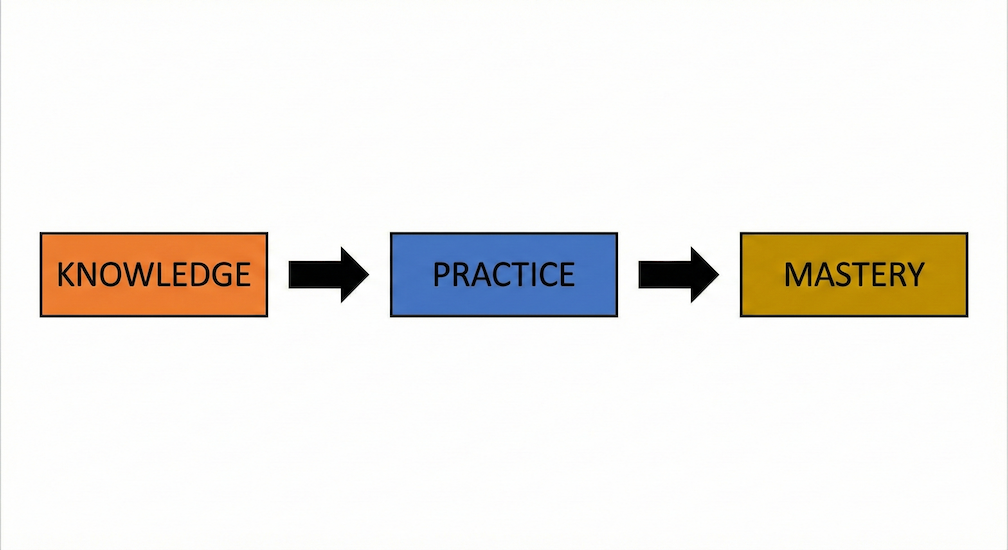
Figure 2:The process of becoming like Jesus Christ where we gain knowledge about him from prophets and the influence of the Holy Ghost, then practice on Earth, and continue to master that process throughout eternity.
President Dallin Oaks
President Dallin Oaks of the Church of Jesus Christ of Latter-day Saints has said:
The Apostle Paul taught that the Lord’s teachings and teachers were given that we may all attain “the measure of the stature of the fulness of Christ”[7]. This process requires far more than acquiring knowledge. It is not even enough for us to be convinced of the gospel; we must act and think so that we are converted by it. In contrast to the institutions of the world, which teach us to know something, the gospel of Jesus Christ challenges us to become something.[8]
That something is like Christ. As we keep covenants, we can develop attributes that he has: charity, integrity, humility, courage, patience, diligence, and selfless service to others.
BYU President Shane Reese
BYU President Shane Reese said in his inaugural address to BYU that we can shift our focus from “doing” to “becoming” which requires constant self evaluation.[9] He also specifically called out the virtue of being a peacemaker:
“As we embrace our unique institutional identity... that will empower us to be peacemakers in an ever more divisive society”
Victor Frankl
Victor Frankl was an Austrian neurologist and psychiatrist who survived the Holocaust. He wrote about his experiences in his book Man’s Search for Meaning. He observed that even in the most horrific circumstances, individuals could find meaning and purpose in life. Frankl believed that our primary drive in life is not pleasure (as Freud suggested) but the pursuit of what we find meaningful. He argued that we have the freedom to choose our attitude and response to any situation, even in suffering.
He writes:
A human being is not one thing among others; things determine each other, but man is ultimately self-determining. What he becomes - within the limits of endowment and environment - he has made out of himself. In the concentration camps, for example, in this living laboratory and on this testing ground, we watched and witnessed some of our comrades behave like swine while others behaved like saints. Man has both potentialities within himself; which one is actualized depends on decisions but not on conditions.
Our generation is realistic, for we have come to know man as he really is. After all, man is that being who has invented the gas chambers of Auschwitz; however, he is also that being who has entered those gas chambers upright, with the Lord’s Prayer or the Shema Yisrael on his lips.[10]
Motivations and Desires
We know relatively very little about life after death. Prophets have spoken that this life is a time to prepare to meet God. President Russell Nelson helped us to think about eternity when he said: “Think Celestial”. Our desires can shape our behavior (time dedicated to learning and practicing). If we desire to become like Jesus Christ, we will make choices that help us become like Him. We can pray for those desires and for help to be motivated to act in virtuous ways.
Philosophical Dilemmas
Life is not easy. As we follow Jesus Christ, we will face dilemmas. Perhaps not to the extent that Nephi and Moroni and others face them but we will face them. We can learn from prophets and practice and we will make mistakes. Because of the Savior, we can repent and try again. We can ask for the guidance of the Holy Ghost to help us make the right decisions.
Divine Command Theory
Divine Command Theory proposes that an action’s status as morally good is equivalent to whether it is commanded by God. In other words, what is moral is determined by God’s commands, and to be moral is to follow those commands.
Divine Command Theory assumes that God can do no wrong, and thus if he commands it, then it must be good.
The premise that God is the ultimate source of morality can lead to Euthyphro’s Dilemma, which questions whether something is good because God commands it, or does God command it because it is good. This raises questions about the nature of morality and whether it is independent of God’s will.
Euthypro Dilemma
Euthyphro is a philosophical work written by Plato. In the dialogue, Socrates asks Euthyphro to define piety or holiness. The two struggle to come to a satisfactory conclusion. Is something holy because God approves it, or does God approve it because it is holy? This dilemma raises questions about the nature of morality and whether it is independent of God’s will.
Restored Truth
The restored Gospel of Jesus Christ of Latter-day Saints differs from other Christian theologies in some ways. My interpretation and the resolution of the Euthypro Dilemma is God still has the choice to sin. Or in other words God can cease to be God. But he chooses not to sin but to always do good.
But there is a law given and a punishment affixed and a repentance granted; which repentance, mercy claimeth; otherwise, justice claimeth the creature and executeth the law, and the law inflicteth the punishment; if not so, the works of justice would be destroyed, and God would cease to be God. But God ceaseth not to be God...[11]
“Freedom of choice is a God-given eternal principle. The great plan of liberty is the plan of the gospel. There is no coercion about it; no force, no intimidation. A man is free to accept the gospel or reject it. He may accept it and then refuse to live it, or he may accept it and live it fully. But God will never force us to live the gospel. He will use persuasion through His servants. He will call us and He will direct us and He will persuade us and encourage us and He will bless us when we respond, but He will never force the human mind.”[12]
Planning Your Life
These three statements can form the foundation of your life planning.
A Vision Statement: A forward-looking statement of what you want to become. Write 25 to 100 words.
A Mission Statement: A personal life mission statement for yourself or your family. It defines the themes and framework you will use throughout your life. Write 25 to 50 words.
Values Important to You: The key values you will live by to accomplish your vision and mission. Write 50 to 200 words.
Dallin H. Oaks, “The Challenge to Become,” Ensign, Nov. 2000, 6.
C. Shane Reese, “Becoming BYU: An Inaugural Response,” BYU Speeches, 2023.
Viktor E. Frankl, Man’s Search for Meaning, 1963, Pocket Books, a Simon & Schuster division of Gulf and Western Corporation, New York, NY & p. 212-213.
Ezra T. Benson, Teachings of Presidents of the Church: Ezra Taft Benson, Chapter 3 “Freedom of Choice, an Eternal Principle.”